
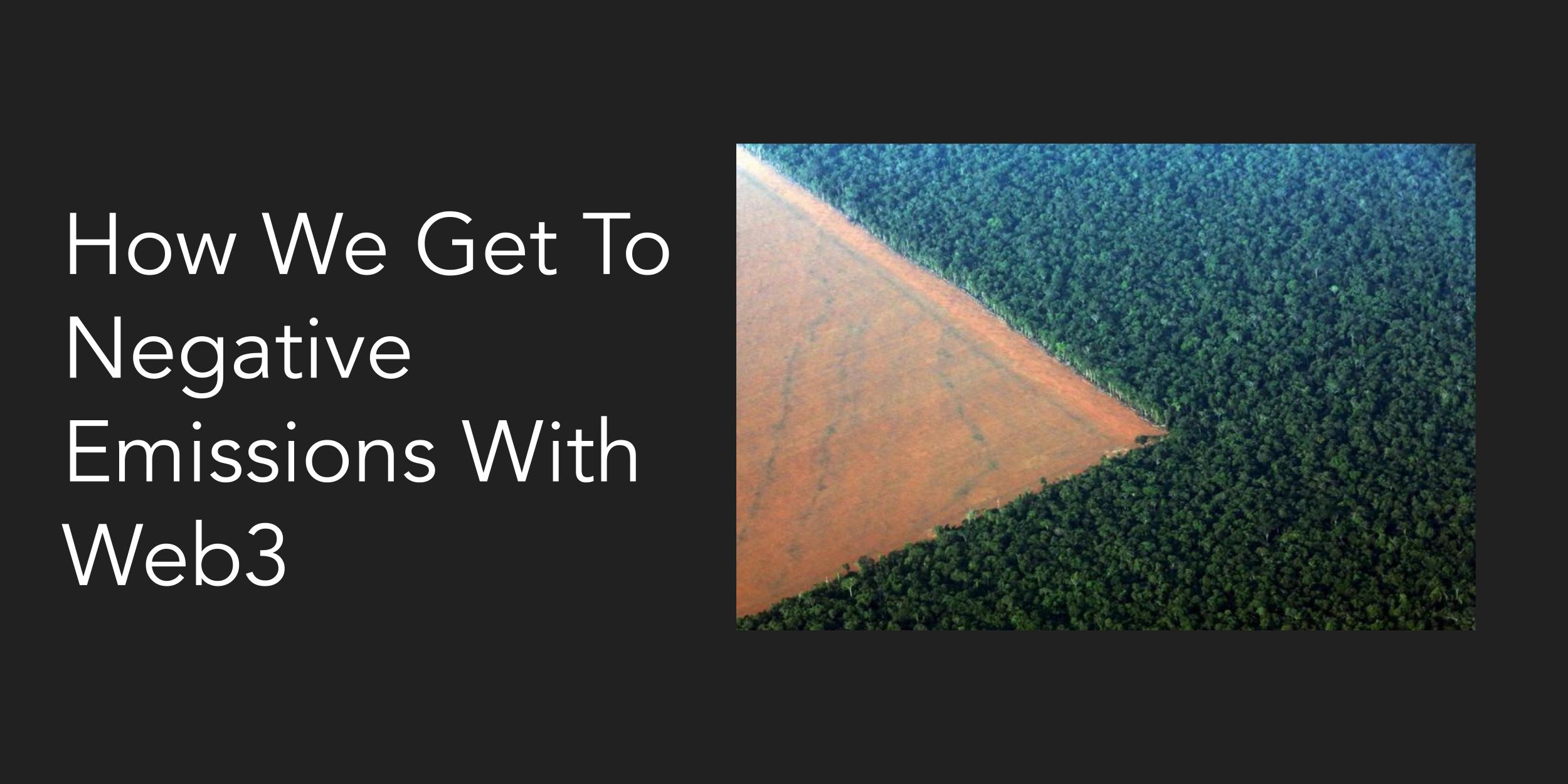
Let’s start with some ecological grief to describe the current state of the Anthropocene. In the course of 40 years, an area the size of Europe has been deforested. A report from the UN estimates that dozens of species are going extinct every day, with as many as 30 to 50 percent of all species going extinct by 2050. 21.5 million people have been displaced by climate change-related disasters since 2010.
Next week, global leaders will travel to Glasgow to lay out their plans to meet the global warming limit of 1.5°C, as agreed upon in the Paris climate agreement. In order to hit that target, the world needs to cut climate pollution in half from current levels by 2030, and bring them down to net zero by 2050, which would require negative emissions.
So how do we get to negative emissions? It’s simple: for every CO2 tonne released into the atmosphere, we need to remove one tonne. That would keep us at a stasis of about 40 billion tonnes emitted annually. But that won’t remove the excess carbon. For that we need to remove 1.5 trillion tonnes before 2050.
There are three main methods in which the Web3 community is already attempting to incentivize and remove carbon from the atmosphere:
- Voluntary carbon markets
- Reforestation / Afforestation & Regenerative Agriculture
- CO2 credit and natural resource-backed currency
Voluntary carbon markets
Carbon credits are certificates representing quantities of greenhouse gases that have been kept out of the air or removed from it. One carbon credit equals one metric ton (tonne) of carbon dioxide. The current weighted carbon price traded on markets is $34.99.
Voluntary carbon credit markets are growing quickly, increasing 20% in 2020 to $272 billion, and have been helping direct private financing to climate-action companies and projects.
Problems with voluntary carbon markets
Overall, the market is characterized by low liquidity, lack of transparency, and limited data availability. While reputable standards certify projects’ adherence to requirements, buyers typically have limited transparency on the progress of carbon-reduction projects.
How Web3 can improve voluntary carbon markets
Issuing carbon credits on blockchains solves the “double counting” problem which is when two parties claim the same carbon dioxide removal. By using Ethereum for carbon issuances you would have verifiable proof when a tokenized carbon credit is “burned” or “retired.”
Another benefit of Web3 is that decentralized finance primitives make it easier to collectively pool capital and increase liquidity. With smart contracts, rewards can be automated on-chain, in real time.
One project that began to standardize carbon credits as tokens is the Toucan Protocol, which built a “carbon bridge” to bring carbon credits to Polygon. Users of the carbon bridge retire carbon offsets in the “real world” before bringing them on-chain to guarantee that a carbon token is unique.
Since launch on October 18th, already 6.3 million tons of CO2 have traversed the carbon bridge — about 12% of NYC’s annual CO2 emissions.
Reforestation and Regenerative Agriculture
Rewilder.xyz is selling NFTs to raise funds to purchase land for passive rewilding in Brazil. People who purchase the NFT will get a transparency tool to track exactly how money is used.
Nori is an Ethereum-based app focused on creating a market for sequestering carbon in croplands. Regenerative agriculture could potentially remove 4.8 billion tons of CO2 a year.
Toward a green currency
Each of these projects help bring existing carbon credits and natural resources onto Ethereum. With more carbon credits and natural resources represented as tokens, we can start imagining distinct “green currencies” that are backed by carbon credits and natural resources.
Celo announced it would enter Elon Musk’s $100 million USD carbon removal challenge, proposing to have 40% of the $850 million Celo reserve transition to tokenized rainforest and other carbon sequestering assets.
It is clear that through tokenizing and creating liquid carbon markets and using them to back new currencies, we can have money that contains agreements about the planet, the species, and what we hold sacred.