
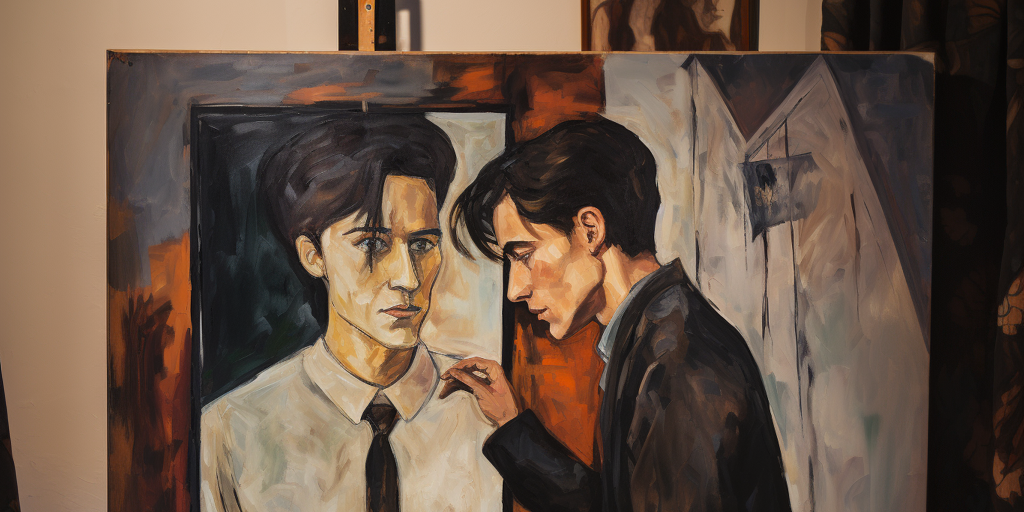
“Most artists are narcissists.” This was how a friend, a filmmaker, described his recent experience at a salon in NYC. (If you were wondering, salons are very much still a thing in NYC and some have even made a business of it).
Toward the end of the evening, it took very little nudging by the host to encourage a virtuoso pianist with supposed synesthesia to share her talents. After an energetic round of applause, the floodgates opened to an impromptu volunteer variety show. To my friend, the act of desiring the limelight to share one’s talent required a degree of narcissism: a deep down feeling that you are special and possess something no one else has.
But this can’t be true of all artists and creatives, can it?
It turns out, there are plenty of psychology studies that associate perceived creativity with narcissism.
One 2010 Stanford University study paired up 76 students and asked them to pitch a movie concept to their partner. When pitched by the most narcissistic students, the concepts impressed the partner evaluating the movie pitch about 50% more than did those from the least narcissistic pitchers. The difference? Narcissists were more enthusiastic, witty, and charming — all traits that people associate with creativity.
Another study showed that people who believed they were creative were more likely to engage in creative pursuits. The most extraverted like to share their talents. Moreover, if you really think you’re good at something, you’ll likely do it, even when facing the chance of critique or failure.
According to Yi Zhou, a researcher at Florida State University, investing in narcissistic artists will be more profitable in the long run. Zhou measured narcissism among painters through a peculiar method: the size of their signatures. The larger the signatures, the higher an artist’s prices and attention.
There is a difference between narcissism and self-love. My generation encourages self-love, which is crucially free of the pernicious quality of narcissism: not caring about others. In The Agony of Eros, Byung-Chul Han argues that we are increasingly living in a narcissistic society — that capitalism requires people to invest in their own subjectivity and quest for self-improvement.
“Narcissism is not the same as self-love. The subject of self-love draws a negative boundary between him or herself and the Other. The narcissistic subject, on the other hand, never manages to set any clear boundaries…meaning can exist for the narcissistic self only when it somehow catches sight of itself.”
It is fairly well-studied that artists also have higher rates of depression and bipolar disorder. The recent passing of Angus Cloud and Sinéad O’Connor are poignant examples of artists succumbing to mental illness — extreme counter-examples of the narcissistic artist archetype. I can cope with larger signatures more than I can with loss of life.